







Introduction to the Exhibition

Having evolved from a real into an intensely imagined place, the splendid, now ruined medieval Armenian capital of Ani has given rise to multifaceted afterlives across spatiotemporal continuities and ruptures. Mythologized already during medieval times as the city of one thousand and one churches, it has served as a reference for varying identities in Armenia and in the global Armenian diaspora, while carrying ambiguous valences for the contemporary society of Turkey, within the borders of which it currently is.
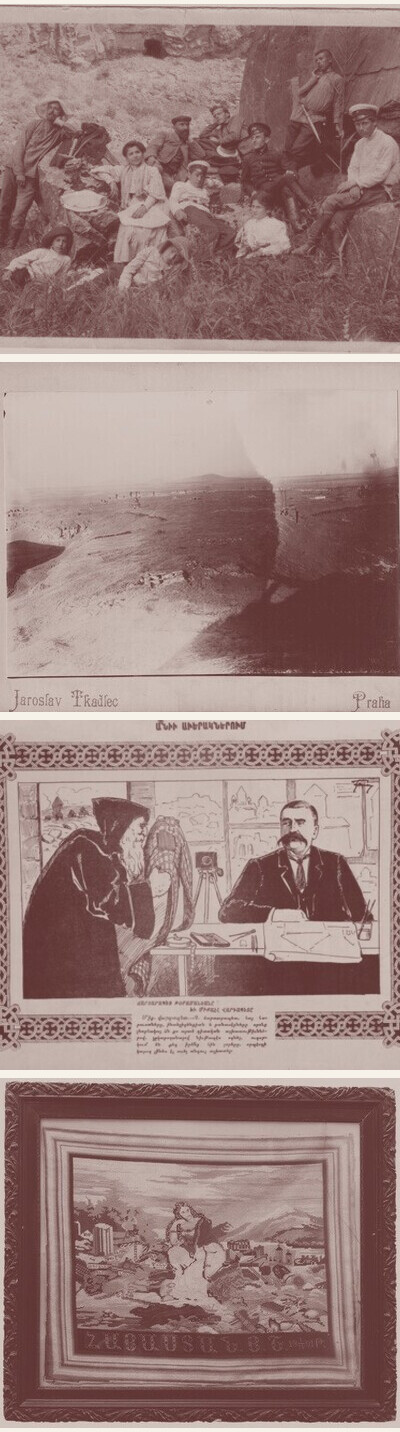
The present exhibition explores the rich social and cultural afterlives of Ani by bringing together representations that have not yet been juxtaposed. These range from textual, hand-drawn, and printed visuals to photographic, painterly, filmic, and digital representations of various genres. They point to Armenian perspectives inflected by modern national and post-catastrophic diasporic processes, as well as to diverse European and Turkish perceptions. They also span a wide variety of discourses and academic registers.
In assembling diverse representations of the ruins of Ani, this exhibition interrogates the processes of complex memory-scapes creatively linked across media, cultures and geographies. We therefore invite visitors not merely to receive the myriad afterlives generated by the ruins of Ani, but to actively connect them through the unprecedented embodied, affective and material space of interaction that this exhibition has furnished. This way, we hope to give rise to a more reflective memory culture around and beyond the ruins of Ani.
Historical Introduction to Ani
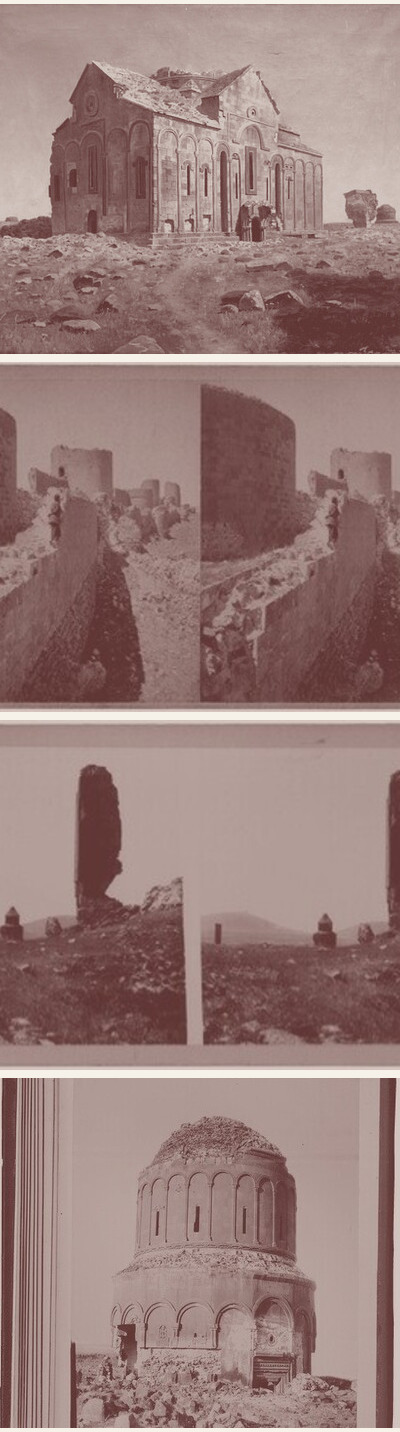
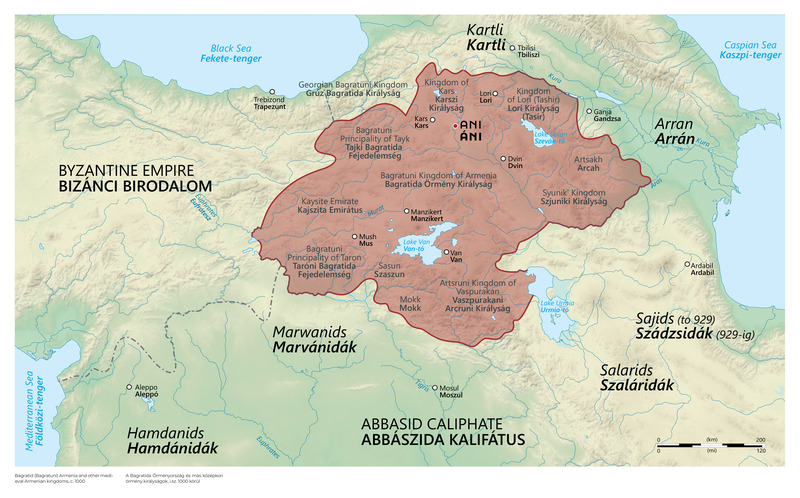
Located in the north central region of what is known as the Armenian Highland or Historic Armenia, the fortified city of Ani was the 10th-11th centuries capital of the Bagratid Armenian Kingdom. At its height, Ani was a major political and economic node in the Silk Road. With a sizable population, it boasted great architectural achievements, including numerous churches considered masterpieces. Ani continued to exist as a city with Byzantine, Seljuk, Georgian and Mongol rulers and was abandoned only in the 17th century, partially due to an earthquake.
With the arrival of the Ottomans in the region and the constant strife between them and the Persian dynasties, the region was a war theater and was devastated even more. During the early-modern period, the ruins of Ani fascinated infrequent European travelers to the region. Following successful military campaigns, the Russian Empire annexed Ani and surrounding areas in 1878. It is during this period that systematic excavations began in Ani, led by Nikolai Marr, building on previous scholarship.
By 1923, Ani changed hands once again, finding itself within the newly redrawn borders of the Republic of Turkey. Due to the Cold War and the ongoing denial of the Armenian genocide, Turkish society’s attitude towards the ruins of Ani has ranged from neglect to erasure and appropriation. Nevertheless, in 2016, the ruined city was listed as a UNESCO World Heritage Site. This latest development has arguably strengthened the more neutral preservationist discourse around Ani, a discourse with its own history, the long-term outcomes of which remain to be seen.