


Emergent Afterlives of the Ruins of Ani
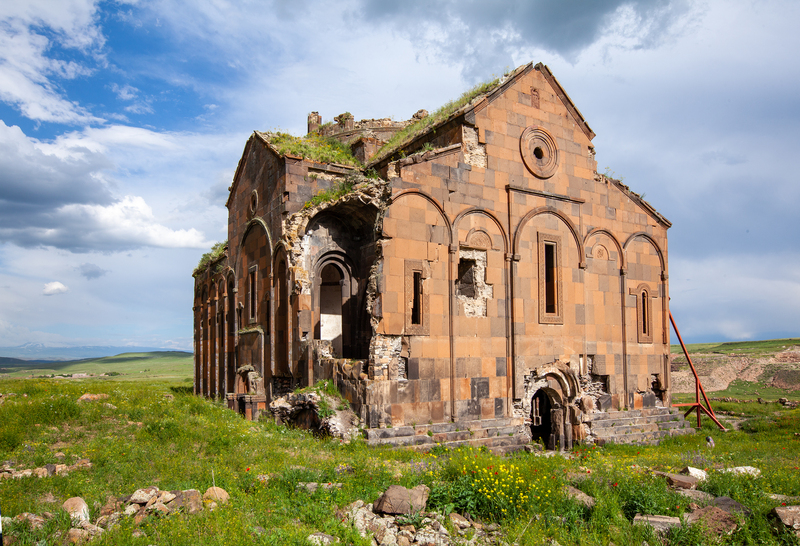
While the basic geopolitical infrastructure determining access to the ruins of Ani did not change during the second half of the 20th century, three interlinked circumstances gave rise to their new afterlives. First was the gradual maturation of a global preservationist discourse, which led to the inclusion of the ruined city on the UNESCO World Heritage List and its incorporation into the World Monuments Fund database. Second, with the reappearance of an independent Republic of Armenia, its scholarly and activist community, along with its public more broadly, began engaging with the ruins of Ani more freely, even though the border with Turkey has remained closed. Third, digital technologies such as precise scanning, virtual reconstruction and drones, combined with the new forms of connectivity enabled by the Internet and social media, led to new forms of archival, scholarly, artistic, and popular representation. The future afterlives of the ruins of Ani will be shaped in large part by the interplay of these circumstances within and beyond Turkey, Armenia, and the Armenian diaspora.
Highlights from This Period
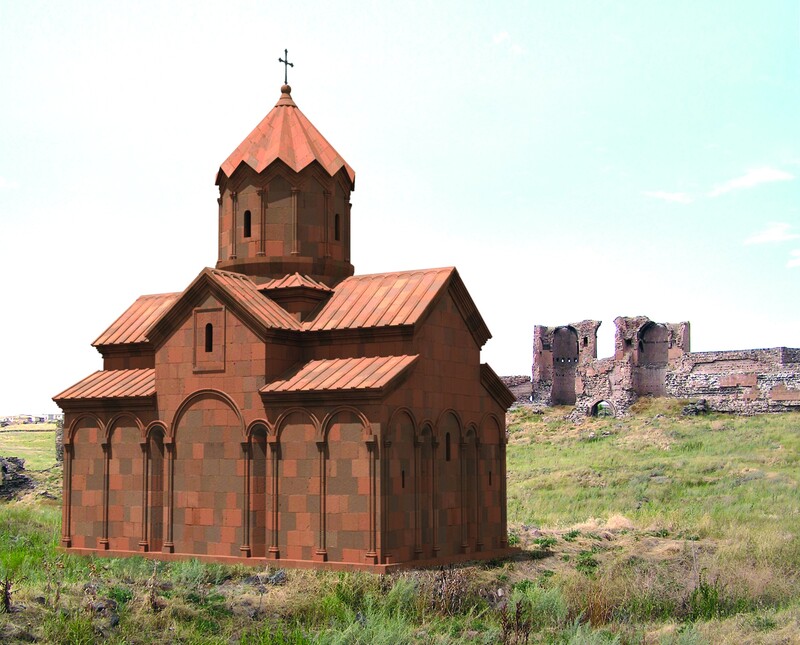
Ruins of Ani in the Digital Age – Documentation, Reconstruction, Imagination
With the development of new technologies, including the Internet, computer graphics, and 3D modelling, Ani entered the virtual world through projects and research initiatives aimed at documenting the ruins, reconstructing or imagining the city in its glory days and providing remote access to the site. The pioneering project in this new era has been Virtual Ani, a website created in 1999 by Stevan Sim, a Scottish explorer who devoted his life to documenting the disappearing Armenian tangible heritage in Turkey. Within five years, Virtual Ani grew to over 300 separate webpages and more than 1100 pictures, becoming an unsurpassed source of knowledge about the city.
A more recent initiative is the Ani Mobile Application: Explore World Heritage Ani, created by the Anadolu Kültür Foundation and a team of international scholars. The app is a rare example of successful cooperation between Turkish and Armenian specialists, offering an engaging and informative way to explore Ani for both visitors to the site and those who cannot travel to the Armenian-Turkish borderland. Additionally, Azad Balabanian, a 3D artist based in California, has been single-handedly creating precise high resolution scans of the Ruins of Ani, some of which can be accessed through his website (azadux.com).
Here, we present a selection of works by the Research on Armenian Architecture (RAA) Foundation, which, for over four decades, has been recording, studying, and publishing on Armenian historical monuments in Armenia and neighbouring countries. Recently, one of the RAA’s flagship projects has been the creation of 3D models of ruined monuments of Ani and the neighbouring Khetzkonk monastery. The models, combining high-end graphic design technologies with years of architectural and historical research, not only provide stunning visualisations of destroyed churches that form the pinnacle of Armenian medieval architecture, but also serve as an entry point to the final part of the exhibition – an imagined world of the Kingdom of Ani.
The Ruins of Ani as a World Heritage Site
In 1988, Turkish authorities included the ruins of Ani on the country’s list of cultural heritage sites. This marked a moment when the site became recognized as in need of protection, even though the official narrative around it, testified by the plaques mounted near various structures, still tends to obfuscate or downplay their Armenian origins. Additionally, some buildings were restored, but in a controversially distorting manner.
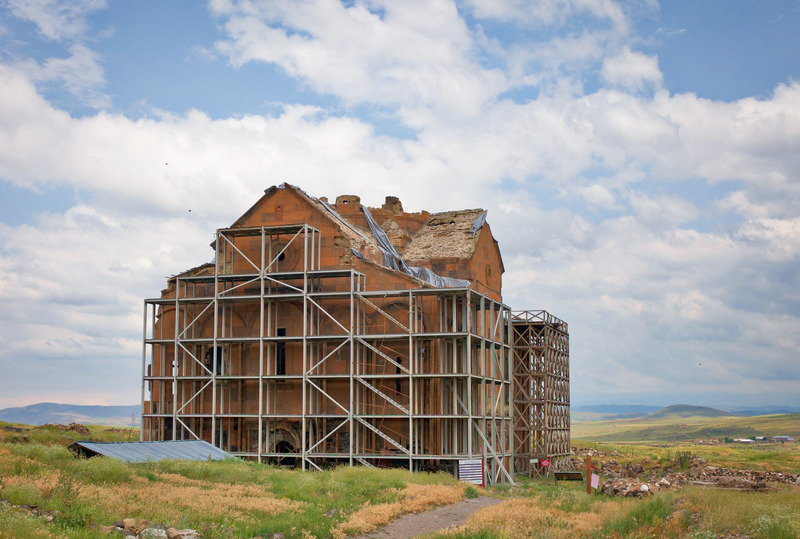
In 2016, the ruins of Ani were added to the UNESCO World Heritage List, in part due to Norwegian diplomatic efforts, linked to prospects of rapprochement between the governments of Turkey and Armenia. More careful and internationally monitored preservation work took place, spearheaded by Yavuz Özkaya, an architect from Turkey, in collaboration with experts from Armenia, including the stone master Arayik Avetyan. To encourage tourism and deeper understanding between societies, a mobile app on Ani was produced, the report Ani in Context, in Turkish, English and Armenian, was published in 2014, and the exhibition “Ani, Poetry of Stones: An Architectural Treasure on Cultural Crossroads” was organized by the Norwegian Institute for Cultural Heritage Research (NIKU), Anadolu Kültür from Turkey and Eurasian Partnership Foundation from Armenia. The exhibition was held in Istanbul and Yerevan in 2018 and in Ankara and Kars in 2019.
Despite ongoing shortcomings in giving access to researchers and preventing material and cultural appropriation of the ruins of Ani, a chronic problem with Armenian monuments in Turkey, these latest developments speak of a willingness on the part of various members of its society to cultivate a more scholarly-minded, preservationist attitude towards the ruins of Ani, in contrast to the neglect and damaging exposure that they were subjected to after the region was made part of Turkey in 1921.